Which Part of Ashwagandha Is in the Bottle?
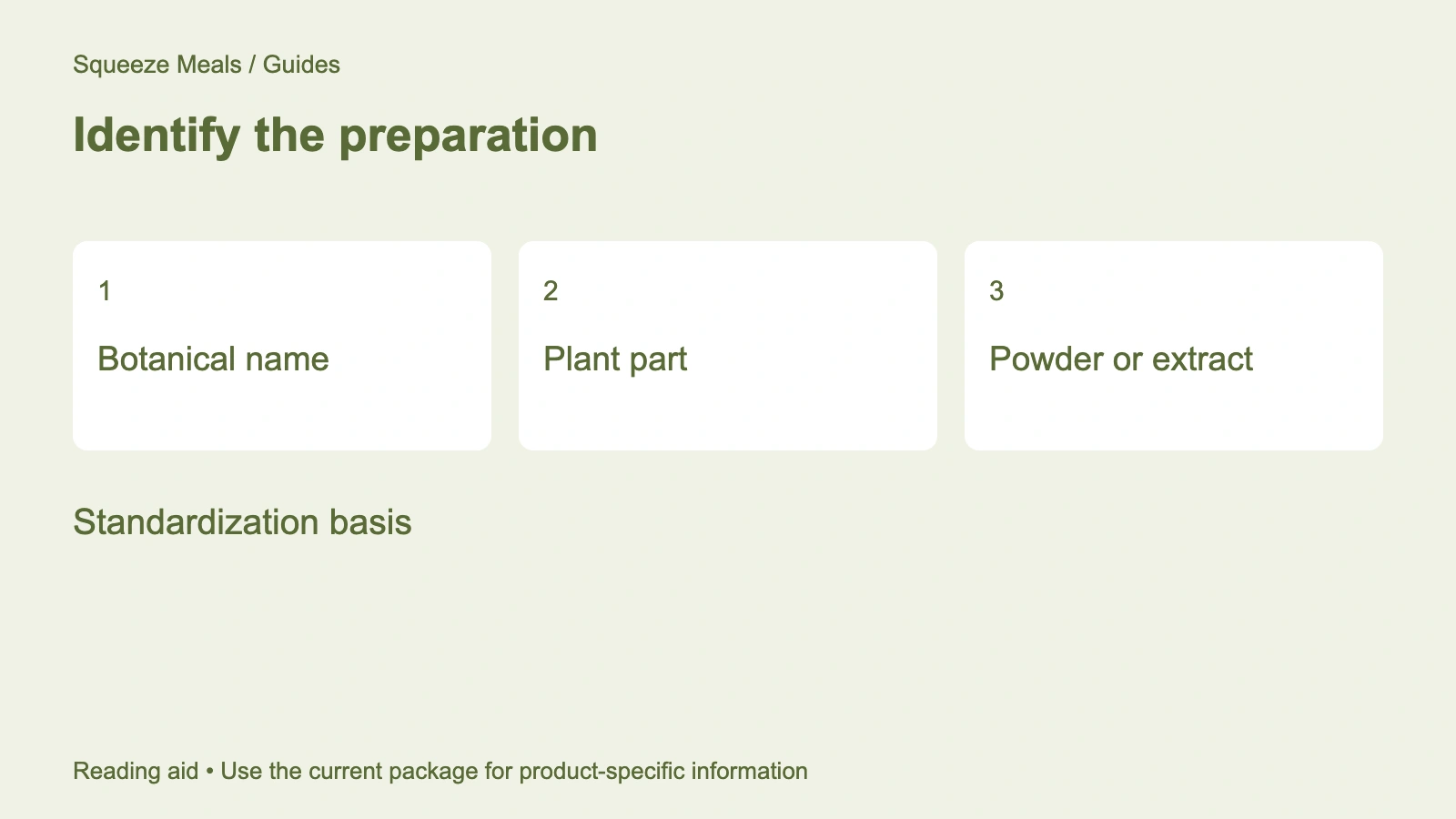
Look for the plant part on an ashwagandha label. A root preparation and a root/leaf extract need separate descriptions in your notes. Save the extract wording and any stated standardization with the serving size.
Make an identity record
NCCIH describes ashwagandha supplements as commonly containing root, leaf, or extracts of those parts. Its research summary also notes that studies have used different preparations. A study or label for one preparation should not be treated as a direct description of every other bottle.
Copy the botanical name, plant part, and preparation from the current panel. If the product does not disclose one of those details in the available image, write "not shown" and ask the seller.
| Field | What to save | Follow-up when unclear |
|---|---|---|
| Plant identity | Botanical name as printed | Request the complete label |
| Plant part | Root, leaf, or stated combination | Ask which part the preparation uses |
| Preparation | Powder or exact extract wording | Ask what the declared weight refers to |
| Standardization | Stated marker and percentage or amount | Ask for the basis of the statement |
| Serving | Number of units and amount per serving | Confirm the correct package variant |
| Other ingredients | Complete list | Resolve personal avoidance needs |
Read percentages with their context
A percentage without a clear ingredient and basis is not enough for a useful comparison. Keep any withanolide statement beside the extract description to which it applies.
For two shortlisted products, save both panels in the same note. Mark actual differences rather than forcing them into a single score. For example, confirming the plant part will not explain an unclear blend amount. Keep both questions visible until the label or seller answers them.
Safety comes before a shortlist
NCCIH advises avoiding ashwagandha during pregnancy and breastfeeding. It is not recommended before surgery or for people with autoimmune or thyroid disorders; people with hormone-sensitive prostate cancer should avoid it. The source also reports medicine interactions, rare liver-injury cases, and insufficient information about long-term safety. These cautions apply before choosing a brand or extract percentage.
Bring the full label to a clinician or pharmacist if you take medicines, including thyroid treatment or sedatives. Do not use this guide to change a prescribed treatment or to select a personal amount.
The separate sleep-supplement comparison guide covers broader shopping questions. This page addresses identification of the ashwagandha preparation, not a sleep-treatment plan.
Open the Ashwagandha listing to find the exact preparation details, then bring the full panel to a clinician or pharmacist if any of the cautions above apply. Resolve that suitability question before choosing an extract or package.
Sources
Checked October 11, 2026. Recheck the current product label before purchase.
This guide is educational and does not replace current product labels or advice from a qualified health-care professional.