Calcium Amount vs. Calcium Compound
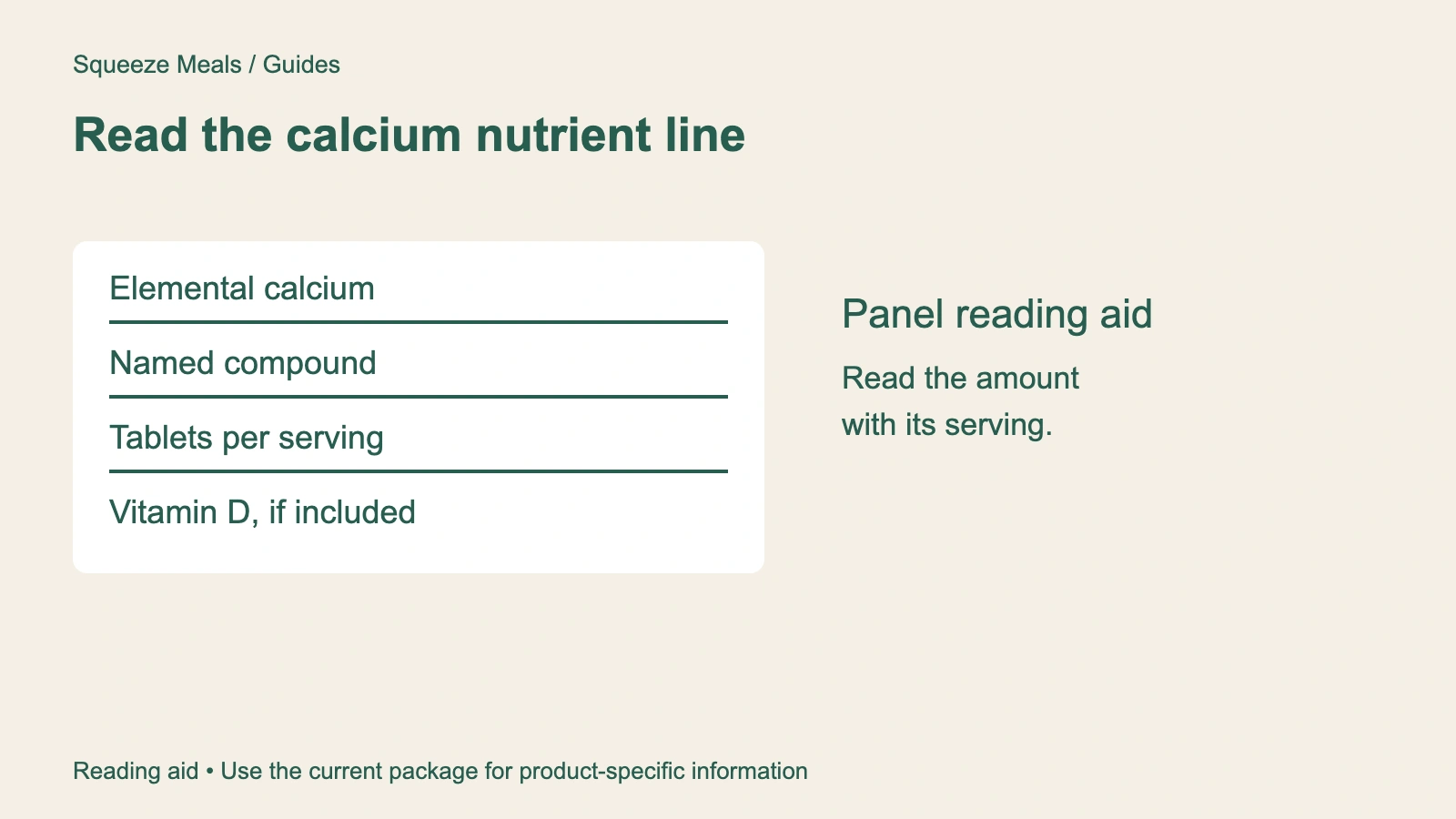
Find the calcium nutrient line before comparing carbonate, citrate, or another named form. That line declares elemental calcium for the serving. If the product also contains vitamin D, record that amount separately rather than treating the combination as a single quantity.
Use the elemental calcium amount
NIH ODS explains that Supplement Facts lists elemental calcium. You do not need to calculate the calcium fraction of a chemical compound to read that declared amount. Copy the nutrient line, then put the source name in a separate field. NIH ODS professional calcium fact sheet
Keep the serving attached. If a label's amount refers to several tablets, the container's tablet count is not its serving count. Before comparing cost, check both numbers and confirm that you are looking at the same current package size shown in the listing.
A front-label reference to a source, complex, or blend can describe something other than the elemental amount. If two numbers seem to disagree, request a readable panel and clarification rather than selecting whichever number makes the product look stronger.
Form and directions belong together
Calcium carbonate and calcium citrate are common forms. NIH ODS describes differences in how food and stomach acid affect their absorption. That information makes the actual directions relevant, but it does not let this guide choose a form for your health history. NIH ODS calcium fact sheet
Record the source wording and instructions together. If a clinician has already recommended a calcium plan, show them any proposed substitution before changing the amount or schedule. A purchase comparison should preserve that plan rather than reinterpret it.
Read combination formulas line by line
| Field | Record | Check against |
|---|---|---|
| Calcium | Elemental amount per serving | The complete serving size |
| Source | Exact form wording | Product directions |
| Vitamin D, if included | Amount and unit | Other vitamin D products you use |
| Other minerals | Each disclosed quantity | Multivitamins and combination formulas |
| Container | Labeled servings and current price | The exact package size |
| Practical use | Tablet count and preparation | Your ability to follow the directions |
A combination can reduce the number of separate containers you handle. It also ties several ingredient amounts together. If you only intended to compare calcium, pause long enough to record the additional nutrients instead of treating them as incidental extras.
The Supplement Facts guide explains general panel fields. Use a separate column for each nutrient here so that calcium and vitamin D do not disappear into one combined score.
Check the catalog without guessing the formula
The Squeeze Meals catalog includes a product named Calcium. Its short name does not establish the form or quantity. Obtain the current label and fill in the comparison fields before deciding whether it is a candidate for your needs.
For cost per labeled serving, divide current price by the servings printed on that package. Note the date and any discount. Price per tablet can be useful for checking arithmetic, but it will not account for different tablet counts per serving.
Include food and medication context
The package cannot estimate the calcium already in your meals. Ask a clinician whether additional calcium is needed and whether medicines or other supplements affect product choice. Mention health conditions, pregnancy or nursing, and planned tests or procedures.
This guide does not set a calcium target or direct you to split or increase servings. It also makes no bone-density or fracture-prevention claim for a catalog product. Keep any individualized instructions with your comparison notes.
On the Calcium listing, check the elemental calcium entry and the number of tablets in a serving. If vitamin D is included, record its amount on a separate line.
Sources
Checked October 2, 2026. Recheck the current product label before purchase.
- NIH ODS: Calcium Fact Sheet for Health Professionals for elemental calcium and formulation context.
- NIH Office of Dietary Supplements: What You Need to Know for general supplement safety and professional consultation.
This guide is educational and does not replace current product labels or advice from a qualified health-care professional.