How Much EPA and DHA Is in a Serving?
The fish oil amount on the front of a bottle does not tell you how much EPA and DHA it contains. Find those two entries on Supplement Facts and read the serving size above them. That is the information you need for an EPA/DHA comparison.
Work through a two-softgel serving
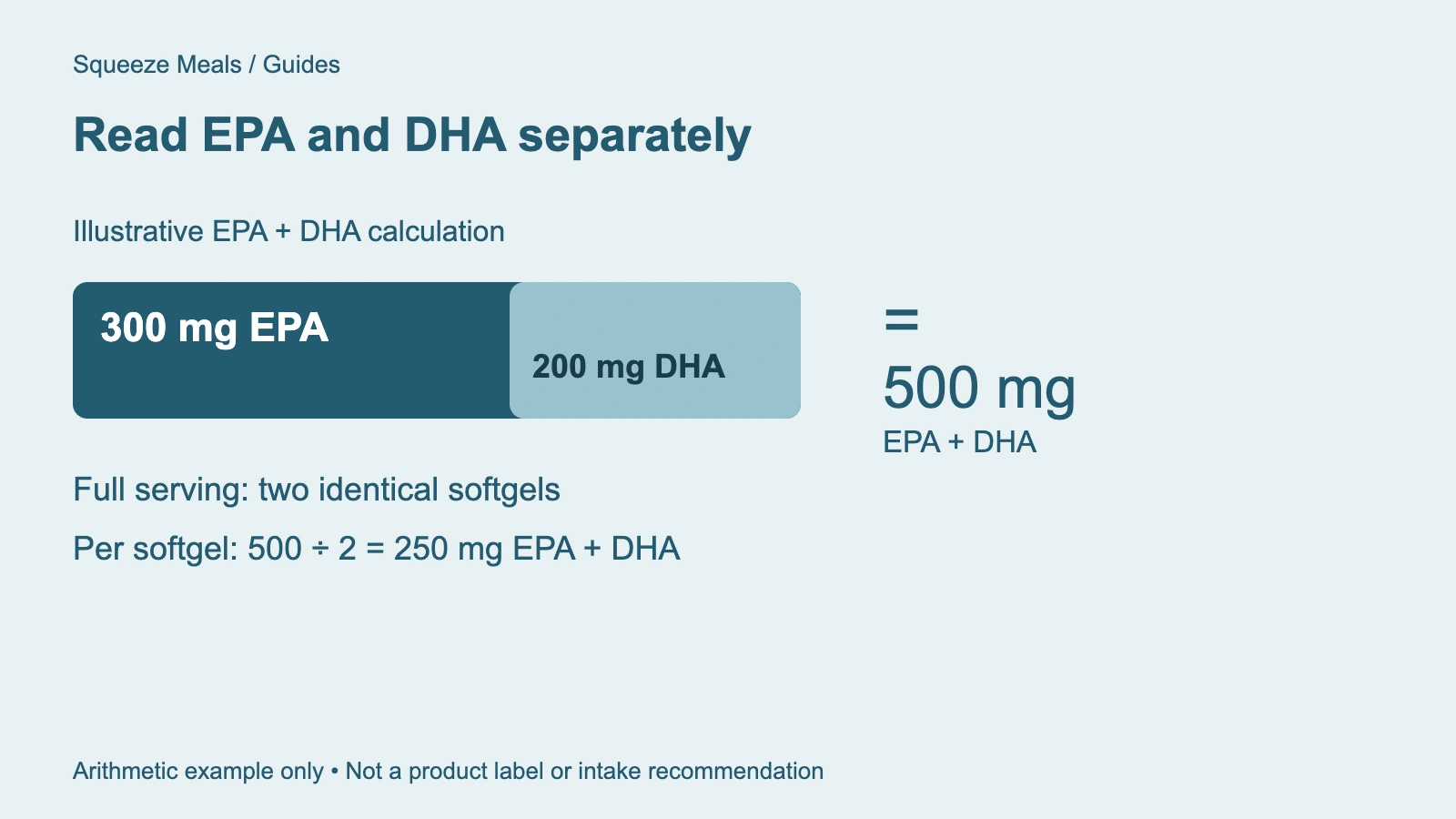
Take this illustrative label: two softgels provide 1,000 mg of fish oil, including 300 mg EPA and 200 mg DHA. These are invented numbers for arithmetic, not a Squeeze Meals product formula or an intake recommendation.
| Entry | Full serving: two softgels | One softgel, if identical |
|---|---|---|
| Total fish oil | 1,000 mg | 500 mg |
| EPA | 300 mg | 150 mg |
| DHA | 200 mg | 100 mg |
| EPA + DHA | 500 mg | 250 mg |
Adding 300 mg EPA and 200 mg DHA gives 500 mg per serving. Both are already included in the 1,000 mg fish oil total, so adding them to that total would count them twice.
A second illustrative label might provide 500 mg combined EPA and DHA in one softgel. The sums match. Comparing their proportions still requires the individual EPA and DHA entries, which cannot be recovered from a combined figure alone.
The NIH ODS omega-3 review describes variation in supplement composition and distinguishes EPA and DHA from other omega-3s. A total omega-3 figure cannot fill a missing EPA or DHA entry.
Keep the rest of the formula beside the calculation
Read the source statement and Other Ingredients list. Fish, krill, cod liver and algal oils can supply different formulas, so an oil source does not establish an EPA or DHA amount. For allergies, ask about the exact product.
Added ingredients need their own entries. Omega-3 with CoQ10 is a catalog example of a combination to examine. Save its current panel and record CoQ10 separately. For Super EPA - 90 Servings, find both EPA and DHA on the panel even though only EPA appears in the product name. We have not assigned either listing an ingredient amount from its name.
For cod liver oil, check for vitamins A and D, which NIH ODS identifies as possible additional nutrients. Include them when taking the formula to a pharmacist.
Price follows the serving count
Divide the current package price by labeled servings per container. Ninety softgels is a capsule count, which may differ from ninety servings. Keep the EPA/DHA amounts next to the resulting cost so you can see what each priced serving contains.
Read storage directions, including instructions after opening, before choosing a bottle. For other panel terms, use the Supplement Facts walkthrough.
When medicines are part of the decision
NIH ODS advises checking omega-3 supplements with a health professional when you take medicines. High doses can raise bleeding concerns with anticoagulants. Bring the complete label and your medication list, and do not use this calculation to replace prescribed treatment or select a treatment dose.
In the fish oil and omegas catalog, save two current panels before comparing the offers. If either EPA or DHA is missing, ask the seller for that specific detail.
Sources
Source review: October 7, 2026. Product formulas and prices must be checked on the current package or listing.
- NIH Office of Dietary Supplements: Omega-3 Fatty Acids, Health Professional Fact Sheet. Omega-3 composition, supplement sources and medication interactions.
- NIH Office of Dietary Supplements: Omega-3 Fatty Acids, Consumer Fact Sheet. EPA/DHA terminology and precautions.
This guide is educational and does not replace current product labels or advice from a qualified health-care professional.