B12 Amounts Are Usually Written in Micrograms
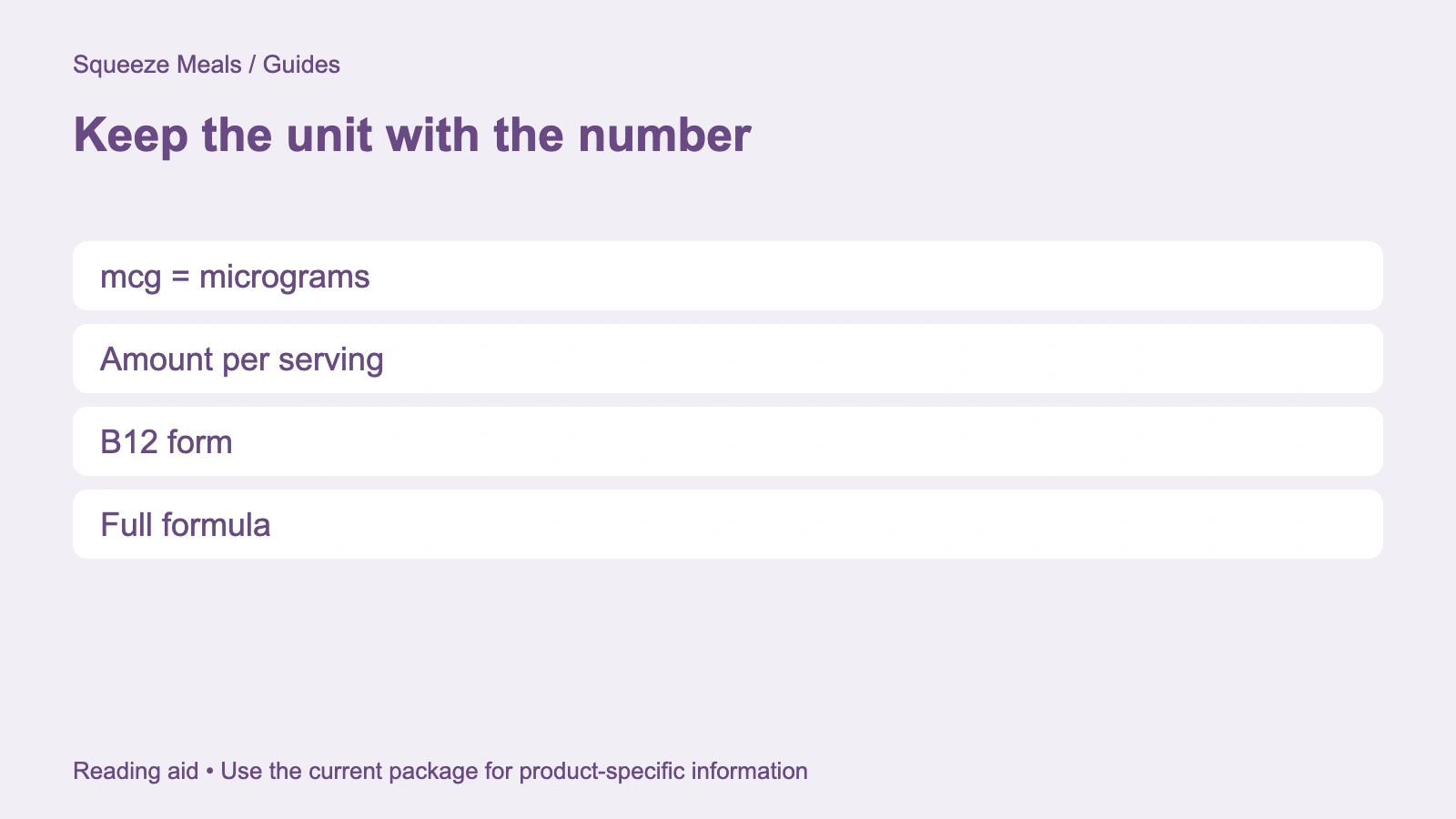
B12 amounts are commonly written in micrograms, abbreviated mcg. Keep the unit when copying the number. Check the serving size next, especially for liquids, and note whether B12 is sold alone or included in a multivitamin.
Keep the unit attached to the amount
B12 labels commonly use micrograms, abbreviated mcg. Copy the unit with the number. When comparing a liquid and a tablet, also record the amount of liquid or number of tablets that makes up the labeled serving.
One milligram equals 1,000 micrograms. That conversion is a unit relationship, not a suggestion to choose a particular strength. Do not compare a number written in mg with a number written in mcg as though the units were identical.
For a liquid, look for the stated volume and measuring directions. A drop and a full dropper are not interchangeable descriptions. If the package is unclear, ask for the manufacturer's current directions before calculating anything.
The form name does not establish a winner
NIH ODS lists cyanocobalamin, methylcobalamin, adenosylcobalamin, and hydroxycobalamin among supplemental B12 forms. Its consumer fact sheet says research has not shown that one supplemental form is better than the others. NIH ODS B12 fact sheet
Record the form as a label fact. Avoid turning words such as "methyl" or "active" into a blanket promise about energy or absorption. The package can identify an ingredient while leaving your personal need unresolved.
NIH ODS also notes that B12 does not improve energy or endurance in people already getting enough. A fatigue concern calls for appropriate assessment, not an assumption that a larger label number will solve it. This guide does not diagnose a deficiency or select a treatment.
Compare what you would actually use
| Label detail | Why to record it | What to keep separate |
|---|---|---|
| B12 amount and unit | Allows a consistent quantity comparison | Your personal requirement |
| Serving size | Connects the quantity to tablets or liquid | Container appearance |
| Named form | Identifies the ingredient | Claims of universal superiority |
| Other nutrients | Shows whether this is a combination formula | The front-label B12 headline |
| Directions | Clarifies the intended use of the format | An improvised schedule |
| Servings per container | Gives the denominator for cost | Bottle volume alone |
If you already take a multivitamin or B-complex, put its label beside the B12 product. It may already contain B12. Bring the combined list to a clinician or pharmacist rather than using the table to create a higher-dose routine.
Check the current B12 listing
Vitamin B12 - 60 Servings is a current Squeeze Meals catalog name. The name helps identify a product to investigate, but it does not provide all the facts needed for a comparison. Read the current panel to confirm the form, quantity, and serving directions.
Calculate cost per labeled serving by dividing the current price by the labeled number of servings per container. Keep shipping and discounts consistent across candidates. For general panel terminology, use the Supplement Facts guide before filling in the B12-specific fields.
Bring these questions to a professional
NIH ODS discusses medicines and health conditions that can affect B12 status. If you take medication or have a known absorption concern, explain that context before choosing a formula or changing an existing plan.
Ask whether your usual diet and current supplements already supply B12, whether any testing is appropriate, and which product directions apply to your situation. Pregnancy, nursing, and planned procedures should also be disclosed. Do not stop medication or alter a prescribed supplement schedule based on this comparison guide.
Find the amount in mcg on the current Vitamin B12 - 60 Servings panel. If you are considering a liquid alternative, compare the declared liquid measure with the full serving on this label.
Sources
Checked October 1, 2026. Recheck the current product label before purchase.
- NIH ODS: Vitamin B12 Fact Sheet for Consumers (NIH Office of Dietary Supplements).
- NIH Office of Dietary Supplements: What You Need to Know for general supplement safety and professional consultation.
This guide is educational and does not replace current product labels or advice from a qualified health-care professional.